"It's true that I didn't like your review of Sammler. I didn't dislike it more than other pieces of yours, but I disliked it. It appeared more than a year after publication of the book and I had heard that an earlier and more friendly review had been rejected by the editors, but knowing what gossip is, I did not take this to be fact. It was the conclusion of your piece—"God lives!"—that offended me. You meant evidently that I was a megalomaniac. But this didn't seem to me to be literary criticism."

Alex Kudera’s award-winning novel, Fight for Your Long Day (Atticus Books), was drafted in a walk-in closet during a summer in Seoul, South Korea. Auggie’s Revenge (Beating Windward Press) is his second novel. His numerous short stories include “Frade Killed Ellen” (Dutch Kills Press), “Bombing from Above” (Heavy Feather Review), and “A Thanksgiving” (Eclectica Magazine).
Showing posts with label Alfred Kazin. Show all posts
Showing posts with label Alfred Kazin. Show all posts
Thursday, August 29, 2024


Friday, January 29, 2021
12/01/1989: abolish the damned thing
"Inducted into the American Academy of Arts and Sciences, along with [Elizabeth] Hardwick, [William] Gaddis, [James] Merrill, [Helen] Frankenthaler. The solemnity of it all in that vast, empty assembly room, especially laughable when the big discussion came up whether or not to abolish the damned thing. [Ralph] Ellison piped up, no, he believed in hierarchy."
~~ from Alfred Kazin's Journals, Selected and Edited by Richard M. Cook
Saturday, January 16, 2021
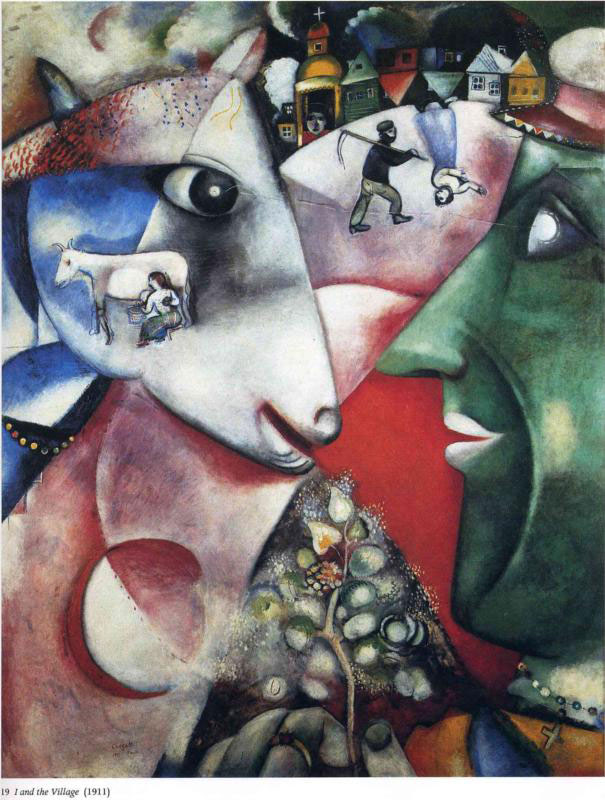
3/29/1985: on Yom Kippur with Isaac Rosenfeld and Marc Chagall
"Thinking about [Marc] Chagall in [New York] during the [second world] war, when he once met up with Isaac Rosenfeld and me on Yom Kippur, 57th Street. I feel a comradely twinge toward a fellow Jew when I remember his speaking Yiddish to us and admitting that though he could not get himself to work on the High High Holy Day, he was sauntering on to Pierre Matisse's gallery for a look (no doubt at his own work). Chagall and Vitebsk did summon up that feeling about Jewishness being a kind of sealed treasure, so deep within oneself. . . And what is it? In my case, the sense of all those others who have gone the long, long road. Solidarity. . . especially with those who so silently died at the hands of one power mad group or another."
Sunday, December 20, 2020
12/27/1968: Kazin Eyes SDS at MLA
"MLA convention at the Americana. A bunch of over-age SDS's broke up the American literature meetings repeatedly with utterly phony, trumped-up charges of police terror. How these guys like the atmosphere of confrontation. I'll not soon forget the line of young instructors forming before the stage while old, gray, bald Henry Nash Smith made his weak remarks. Pour la reste, I listened to Dick Poirer reading the bad, new critical prose over the question of Chicago and thought, what a phony.
"This was a wholly provoked incident, based on a few posters in a hotel lobby, and leading to deliriously self-righteous rant on the part of Lauter and his wife Florence Howe and the others. I watched all this with the greatest contempt. My soul cannot live on this pseudo-revolutionary fare."
~~ from Alfred Kazin's Journals, Selected and Edited by Richard M. Cook
Saturday, December 19, 2020
10/20/68: On Lionel Trilling
"[Lionel] Trilling. I thought that my own feelings were bad enough, but it turns out that his animus against me is even worse. And what has it been about all these years? T[rilling] cannot stand my temperament—he cannot stand the ghetto Jew in me—he cannot stand my vitality. L.T., the would-be gentleman—the little gentleman."
~~ from Alfred Kazin's Journals, Selected and Edited by Richard M. Cook
Saturday, December 12, 2020
I've never felt like an American
"But no one can tell me that Edmund Wilson feels like an immigrant's son. Bill Gibson and his wife asked people at the Arthur Schlesinger Jr.'s house the other day—have you always felt like an American? And I said—I've never felt like an American. But that's because I've given up trying to feel like an American. The lack of tradition is the lack of familiarity in many basic associations—and I know that I am outside them, trying to figure out what to do and what to think in relation to many basic American traditions. . . Yet meanwhile the 'Americans' feel deprived of what they all had. They feel that it's no longer their country."
~~ from Alfred Kazin's Journals, Selected and Edited by Richard M. Cook
Wednesday, December 9, 2020
good critics
"All good critics are frustrated writers. They are frustrated about the skill they are able to suggest so well because they work close to it without being of it. They are parallel to it and hence can see it in the most marvelous detail without being of it. I understand why Edmund [Wilson] works so hard at his journals. They are his living novel, his unending book of life."
~~ from Alfred Kazin's Journals, Selected and Edited by Richard M. Cook
Saturday, December 5, 2020
Kazin on 14th Street
"This old-fashioned house. Studios. Man downstairs playing Bach. Only on the bottom, on greasy, broken down 14th Street are people at home on Memorial Day playing Bach. Like something out of Willa Cather's Stories of Washington Square."
~~ from Alfred Kazin's Journals, Selected and Edited by Richard M. Cook
Friday, December 4, 2020
Kazin on JFK
"It takes nerve to be president, and once you are in, it takes more nerve to keep from being pulled into extreme positions. Kennedy, the intellectual in his speeches, showed all the signs of being a liberal like us. Now that the 'revolt' in Cuba has ended in a disgraceful loss for us as well as for the rebels, he is no longer the man in the middle (us) but the defender of the West in extremis, taking a 'tough' line. [Barry] Goldwater is please, David Lawrence is pleased, The [New York Daily] News and New York Daily Mirror are pleased. I am full of doubt and wonder. As an intellectual pur, nothing but an intellectual, as it often seems to me, I find myself wondering more and more how long it is possible to remain in the middle. The pull of political gravity these days seems physical in its force. All of us liberals and intellectuals, so firmly in the middle, committed to 'principle,' like Kennedy, find ourselves being pushed and pulled."
~~ from Alfred Kazin's Journals, Selected and Edited by Richard M. Cook
Tuesday, November 5, 2019
slovenly and grand
"Like Von Humboldt Fleisher of Saul Bellow's fictional portrait, Delmore in 1939 was 'slovenly and grand,' his ample hair swept back, 'his face with widely separated eyes white and tense.' Cosmopolitan, radical, at home with Rilke, Trotsky, Pound, he was the very embodiment of the New York intelligentsia. Declaiming in what [Alfred] Kazin described as 'gulps of argument,' Delmore transformed Greenwich Village in his talk from a province into cultural capital, importing ideas from the whole European tradition and adapting them to the sprawl and chaos of contemporary America."
~~ from James Atlas's Delmore Schwartz: The Life of an American Poet
~~ from James Atlas's Delmore Schwartz: The Life of an American Poet
Monday, December 24, 2018
Rosenfeld's Orgone Box
"[William] Reich's pseudoscience, eventual mounting megalomania and insanity, and the quackery associated with the orgone boxes he promoted and that [Isaac] Rosenfeld and others embraced, have made Reich's teachings seem patently ridiculous. This box came to be the prime prop in stories of Rosenfeld's decline. [Alfred] Kazin wrote of him looking lonely in there, "as if he were waiting in his telephone booth for a call that was not coming through."
~~ from Rosenfeld's Lives: Fame, Oblivion, and the Furies of Writing by Steven J. Zipperstein
~~ from Rosenfeld's Lives: Fame, Oblivion, and the Furies of Writing by Steven J. Zipperstein
Monday, November 5, 2018
December 25, 1942
"What has the Socialism of intellectuals ever to do with the people? Think of Edmund Wilson's socialism so humanist, meditative, and the rest--but it is as self-consciously personal as Flaubert's hatred of socialism; both artists merely talk about their particular vision of the world and their horror of it."
~~ from Alfred Kazin's Journals, entry from December 25, 1942
~~ from Alfred Kazin's Journals, entry from December 25, 1942
Friday, November 2, 2018
September 9, 1942
"They are killing us off in Europe; they are killing us off by the thousands from the Rhine to the Volga. The blood of the Jews is like the vapor in air that Faustus saw when the Devil claimed his due; but no one claims us but death; our due is, apparently, the 'sympathy' of a few men of good will. From this morning's Times, however, I learn that French Catholic priests have been fighting Vichy's submission to the Nazi Jewish policy. Saliege, the Archbishop of Toulouse, has written this pastoral letter: 'There is a Christian morality, there is a human morality, that impose duties and confer rights. These duties and these rights derive from the very nature of man."
~~ from Alfred Kazin's Journals, entry from September 9, 1942
~~ from Alfred Kazin's Journals, entry from September 9, 1942
Tuesday, October 16, 2018
May 29, 1964
"[Ralph] Ellison came down for lunch, the Department-about-to-hire-you lunch, and talked very soundly and very impressively about the translation of American experience into authentic works of the imagination. . .
"Ralph is terribly impressive. With his beautiful light-Indian-Negro color, the Oklahoma accent, the scar just alongside of the right eye, and above all his sense of American experiences as something naturally flowing into and boiling up creatively in a literary mind of his kind of sensitivity, I find that I learn from him more of what I owe myself than I do from many writer-friends. This same evening, the Hoftstadters just back from Europe were over for dinner, full of self-satisfaction and purring with tales of the Mercedes and the grand tour. Whenever I am with the Hoftstadters, I feel in the air this self-consciously competitive ticking off of everything--academic accomplishment, literary accomplishment, motor-car acquisition."
Sunday, October 14, 2018
June 1, 1985
"An evening with the lost generation. . . Karl Shapiro, Alfred Kazin, Saul Bellow, Bernard Malamud, etc. . . .Now in their 70s, still smoking, hale and hearty sex lives. . . . Of course, some of us wear white on white shirts like Jewish dentists or brokers or nuclear engineers. . . . and some of us have had as many wives as Henry VIII, as many mistresses as Dracula or Jack Kennedy. Resolutely thin, carrying on as usual, determined not to sink like our fathers, but o my! how our social opinions reflect our top lofty incomes, and what excuses we do find (we who once had no trouble execrating everyone in power) for those in power."
~~ from Alfred Kazin's Journals, entry from June 1, 1985
~~ from Alfred Kazin's Journals, entry from June 1, 1985
Tuesday, October 9, 2018
May 29, 1933
"The world of today is at the crossroads--[t]he whole scheme of aimless capitalism and the last dregs of traditionalist nationalism are being seen more clearly in their death struggle."
~~ from Alfred Kazin's Journals, entry from May 29, 1933
~~ from Alfred Kazin's Journals, entry from May 29, 1933
Tuesday, July 24, 2018
James Atlas On Biography
I'm a hundred pages into James Atlas's The Shadow in the Garden, his memoir about his life writing biography, and I'm greatly enjoying it. Although his principle subjects, Delmore Schwartz and Saul Bellow, figure prominently, there is so much more on various writers, biographers, and writer-biographers. Some of the footnotes are extremely detailed or hilarious as well. Thomas Carlyle, Virginia Woolf, Alfred Kazin, Samuel Johnson, and Jean Stafford are only a handful of writers who are included in the narrative. The recurring theme of writers dying isolated in cramped apartments would make Cyrus Duffleman proud.
Wednesday, October 28, 2015
the same obligation to be factual
A New Yorker article on Ernest Hemingway, which included a note about Papa's attack on Alfred Kazin after a bad review of Across the River and into the Trees, reminded me of a long quotation about Kazin from a book I'd recently come across.
"His memoirs tend to be even more memorable than his criticism, partly because when writing about himself he never felt the same obligation to be factual that he felt toward the writers he revered.
He constantly reshapes facts about his family and his marriages: the same wife gets different names in different books, marriages are conflated, he seems lonely, only child because his sister Pearl--she married the sociologist Daniel Bell--never gets mentioned."
~~from the Alfred Kazin section of Edward Mendelson's Moral Agents: Eight Twentieth-Century American Writers.
"His memoirs tend to be even more memorable than his criticism, partly because when writing about himself he never felt the same obligation to be factual that he felt toward the writers he revered.
He constantly reshapes facts about his family and his marriages: the same wife gets different names in different books, marriages are conflated, he seems lonely, only child because his sister Pearl--she married the sociologist Daniel Bell--never gets mentioned."
~~from the Alfred Kazin section of Edward Mendelson's Moral Agents: Eight Twentieth-Century American Writers.
So perhaps Kazin could be perceived as a "Critic Laureate" at the Less United States of Kudera, as he continues to get mention at this blog. I wonder what the author of On Native Grounds would write about the current literary scene, both in and outside the academy.
Monday, November 3, 2014
I Love Dollars
Aside from syllabus readings, I've had only a little bit of time to read on or off line. But one selection was the title story of Wen Zhu's I Love Dollars, which takes us inside contemporary money-mad, sex-crazed China where at least some young people are now interested in becoming writers and musicians.
I also stumbled upon, and then read, Michael Kazin's considerations of his father Alfred Kazin's life and writing, and I continue to support Cooke's fairly recent biography of Kazin, particularly for anyone with some time on their hands.
Last, I came across an article on Louis-Ferdinand Celine's antisemitism. I'd been under the impression that Celine was of that most curious caste of antisemites, that is, one born Jewish, but in fact, it seems I'm mistaken. I'm not sure of why I'd been under that impression or if I ever had a source. Now I find myself reading and skimming his interview from The Paris Review. Here's an excerpt:
My mother always used to tell me, “Poor kid, if you didn't have the rich people (because I already had a few little ideas, as it happened), if there weren't any rich people we wouldn't have anything to eat. Rich people have responsibilities.” My mother worshiped rich people, you see.
Here's one more, Celine on the novel as fighting a losing battle against TV, film, and alcohol:
But novels are a little like lace . . . an art that disappeared with the convents. Novels can't fight cars, movies, television, booze. A guy who's eaten well, who's escaped the big war, in the evenings gives a peck to the old lady and his day's finished. Done with.
I also stumbled upon, and then read, Michael Kazin's considerations of his father Alfred Kazin's life and writing, and I continue to support Cooke's fairly recent biography of Kazin, particularly for anyone with some time on their hands.
Last, I came across an article on Louis-Ferdinand Celine's antisemitism. I'd been under the impression that Celine was of that most curious caste of antisemites, that is, one born Jewish, but in fact, it seems I'm mistaken. I'm not sure of why I'd been under that impression or if I ever had a source. Now I find myself reading and skimming his interview from The Paris Review. Here's an excerpt:
My mother always used to tell me, “Poor kid, if you didn't have the rich people (because I already had a few little ideas, as it happened), if there weren't any rich people we wouldn't have anything to eat. Rich people have responsibilities.” My mother worshiped rich people, you see.
Here's one more, Celine on the novel as fighting a losing battle against TV, film, and alcohol:
But novels are a little like lace . . . an art that disappeared with the convents. Novels can't fight cars, movies, television, booze. A guy who's eaten well, who's escaped the big war, in the evenings gives a peck to the old lady and his day's finished. Done with.
Subscribe to:
Posts (Atom)
-
We're still waiting on a time, but we've added The Ivy Bookshop to the famous 2012 Goodman-Kudera book tour. So this is what we know...
-
If you, or anyone you know, becomes burdened with the gift of an electronic reading device this holiday season, you're welcome to take a...
-
I'm happy to announce that I'll be reading from " Frade Killed Ellen " or Auggie's Revenge at 3 p.m. as part of an ...
-
My interview with Olga Gardner Galvin of ENC Press is available here: http://whenfallsthecoliseum.com/2009/06/22/interview-with-olga-gardner...
-
Smashwords: http://www.short-fiction-ebooks.com/_/_/571510/turquoise-truck Apple: https://itunes.apple.com/us/book/turquoise-truck/id10...
-
At the SEIU conference in Washington D.C. last November , one student group reported that they are fighting to make income-based repayment t...
-
Debra Leigh Scott's "insightful article" on " How The American University was Killed in Five Easy Steps " flew aroun...
-
"[B] ut the fact that [Roberto] Arlt wrote 'badly' is what made him important. Because Arlt’s style was no style at all—an abra...
-
Meanwhile, over at the Author's Guild , Scott Turow reminds us of how hopeless it is for all but the chosen few of the publishing world ...
